
Bitcoin Price Analysis: Why BTC Is Moving Today 📈

Bitcoin's recent price trend (last 30 days)
Bitcoin (BTC), the world's largest cryptocurrency by market capitalization, continues to capture the attention of investors, traders, and businesses worldwide. Whether Bitcoin is rallying to new highs or experiencing short-term corrections, one question remains constant:
Why is Bitcoin moving today?
Bitcoin's price is influenced by multiple factors, including institutional demand, ETF inflows, macroeconomic events, whale transactions, mining activity, government regulations, and overall market sentiment. Let's break down the biggest reasons behind Bitcoin's latest price action.
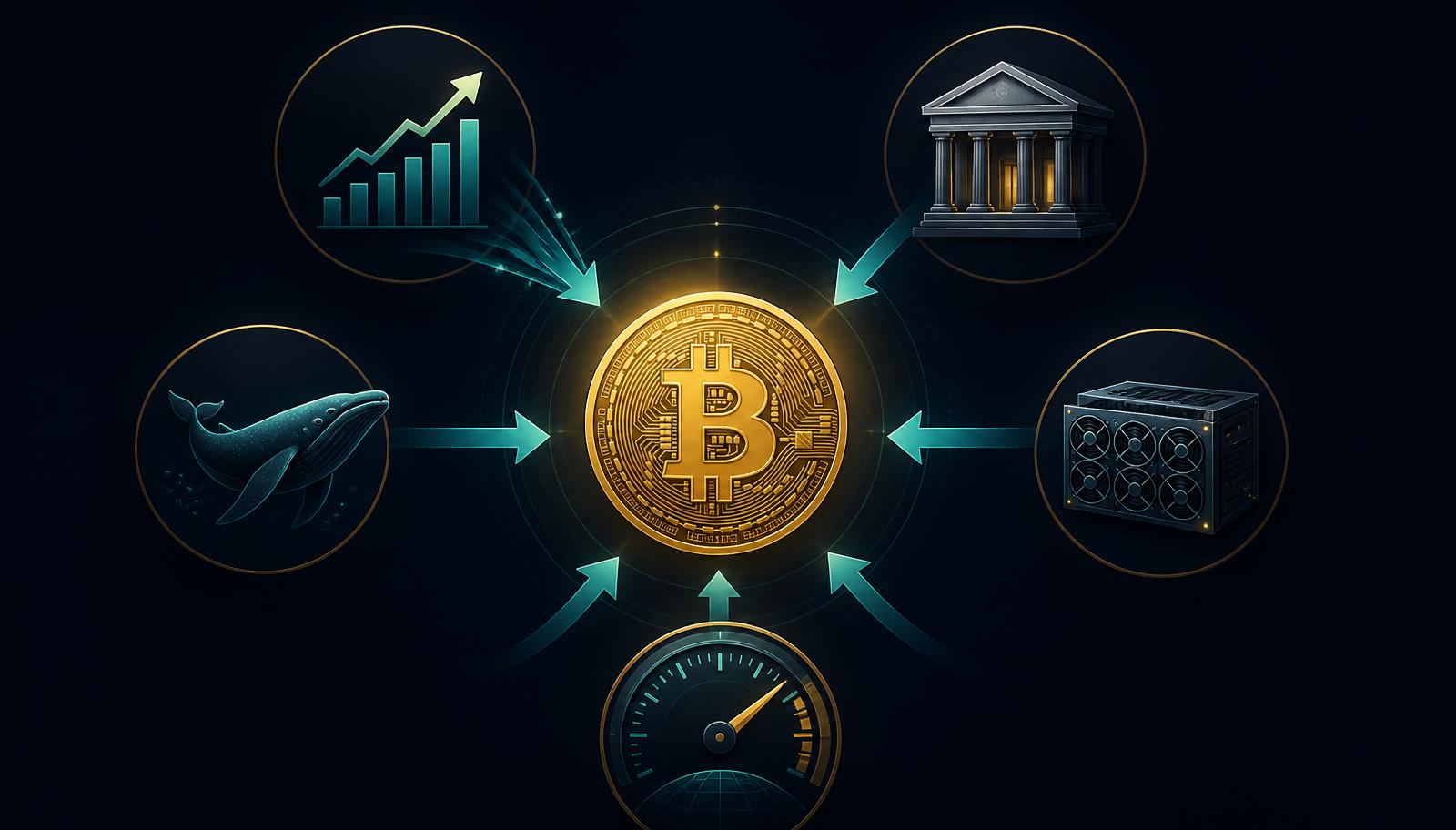
1. Institutional Investors Continue Buying Bitcoin
Large financial institutions have become one of the biggest drivers of Bitcoin demand.
Asset managers, hedge funds, banks, and publicly traded companies continue adding Bitcoin to their investment portfolios as a long-term store of value. Institutional buying often reduces the available supply on exchanges, increasing upward pressure on Bitcoin's price.
Key takeaway: increased institutional demand typically supports long-term bullish momentum.
2. Bitcoin ETF Activity
Spot Bitcoin ETFs have made it easier for traditional investors to gain exposure to Bitcoin without directly holding the cryptocurrency. Whenever ETF inflows increase significantly, Bitcoin demand often rises. Likewise, heavy ETF outflows can create temporary selling pressure.
Investors closely monitor daily ETF data because it has become one of the strongest indicators of market sentiment — see daily spot ETF flow tables and the U.S. SEC for filings.
3. Macroeconomic Events
Bitcoin doesn't trade in isolation. Global financial markets influence cryptocurrency prices every day.
- Interest rate decisions
- Inflation reports
- Employment data
- Central bank announcements
- US Dollar strength
- Global economic uncertainty
Lower interest rates often encourage investors to move toward risk assets such as Bitcoin. Track policy directly at the Federal Reserve and inflation prints at the U.S. Bureau of Labor Statistics.
4. Whale Transactions
Large Bitcoin holders — commonly known as "whales" — can significantly impact market prices. When millions of dollars worth of BTC move between wallets or exchanges, traders closely watch these transactions.
- Large deposits to exchanges may indicate potential selling pressure.
- Large withdrawals often suggest long-term holding.
You can follow large transfers yourself on mempool.space, or watch any address with our free Bitcoin address tracker.
5. Supply and Demand
Bitcoin has a fixed maximum supply of 21 million coins, making scarcity one of its strongest investment narratives. As adoption increases while supply remains limited, demand can naturally drive prices higher over time. This scarcity continues attracting investors seeking protection against inflation. The rules are spelled out in the original Bitcoin whitepaper.
6. Bitcoin Halving Impact
Bitcoin's halving events reduce the number of new Bitcoins entering circulation. Although halvings occur approximately every four years, their effects often continue influencing market trends long afterward. Reduced supply combined with growing demand has historically contributed to bullish market cycles.
7. Growing Business Adoption
Thousands of businesses now accept Bitcoin payments. From online retailers to payment gateways and global merchants, Bitcoin continues expanding as a legitimate payment method. Greater adoption strengthens Bitcoin's long-term fundamentals by increasing real-world utility.
If you run a business, start here: how to accept Bitcoin payments, how a Bitcoin invoice generator works, or read about our crypto invoicing features and pricing.
8. Government Regulations
Regulatory announcements remain one of the biggest catalysts for short-term price movements. Positive developments — such as clearer crypto regulations or supportive legislation — can boost investor confidence. On the other hand, restrictive policies or unexpected enforcement actions may trigger temporary market volatility.
9. Bitcoin Mining
Bitcoin miners play a crucial role in network security. Changes in:
- Mining difficulty
- Hash rate
- Energy costs
- Miner profitability
can influence market sentiment and, at times, impact short-term price action. Live network stats are published by Blockchain.com.
10. Market Sentiment
Fear and greed often move markets faster than fundamentals. Positive news can trigger FOMO (fear of missing out), while negative headlines can lead to panic selling. Professional investors typically combine technical analysis with on-chain data and macroeconomic indicators before making investment decisions — the Crypto Fear & Greed Index is a common quick gauge.
Is Bitcoin Still Bullish?
Many analysts remain optimistic about Bitcoin's long-term outlook due to:
- Increasing institutional adoption
- Limited supply
- Growing global acceptance
- Continued infrastructure development
- Rising demand for decentralized assets
However, Bitcoin remains a highly volatile asset, and investors should expect both upward and downward price swings.
What Investors Should Watch Next
To better understand Bitcoin's next move, monitor:
- ETF inflows and outflows
- Institutional buying activity
- Federal Reserve and central bank announcements
- Inflation and employment data
- On-chain metrics
- Exchange reserves
- Whale wallet movements
- Bitcoin network hash rate
These indicators often provide valuable insights into market direction.
Final Thoughts
Bitcoin continues to evolve from a niche digital asset into a globally recognized financial instrument. While daily price movements can be influenced by news, economic events, and investor sentiment, Bitcoin's long-term value proposition remains centered on scarcity, decentralization, and growing adoption.
Whether you're a trader, investor, or business looking to accept Bitcoin payments, staying informed about the factors driving BTC's price can help you make more informed decisions in an ever-changing cryptocurrency market.
Frequently Asked Questions (FAQ)
Why is Bitcoin moving today?
Bitcoin's price may move because of ETF flows, institutional buying or selling, macroeconomic news, regulatory developments, whale transactions, or changes in overall market sentiment.
Is Bitcoin a good long-term investment?
Many investors view Bitcoin as a long-term digital asset because of its fixed supply, growing adoption, and increasing institutional interest. However, it remains volatile, so investing carries risk.
What affects Bitcoin's price the most?
Some of the biggest influences include supply and demand, ETF activity, interest rates, inflation, government regulation, whale activity, and investor sentiment.
Accept Bitcoin at today's price
Price in fiat, settle in BTC, keep your keys. Self-custodial invoicing with live rate quoting.
This article is for informational purposes only and is not financial advice. Last updated: August 2026.